Choosing between a CDL A vs CDL B license can shape the entire direction of your trucking career. With different opportunities, pay scales, and demands, making the right choice from the start can save you time and help you grow faster in the transportation industry.
In this guide, we’ll break down the differences, the career paths each license unlocks, and how to decide which is right for your goals.
The Problem: Not All CDLs Open the Same Doors
Many new drivers think any Commercial Driver’s License will qualify them for the same jobs, but that’s not the case. The CDL you choose determines:
- What types of vehicles can you legally drive
- Your potential earning opportunities
- The lifestyle and schedule you’ll maintain
- Your long-term career advancement
Choosing the wrong license can mean limiting your job options or needing additional training later on. Understanding the CDL A vs CDL B difference upfront helps you make a smarter investment in your future.
Insights & Strategies: Understanding CDL A vs CDL B
What Is a CDL A?
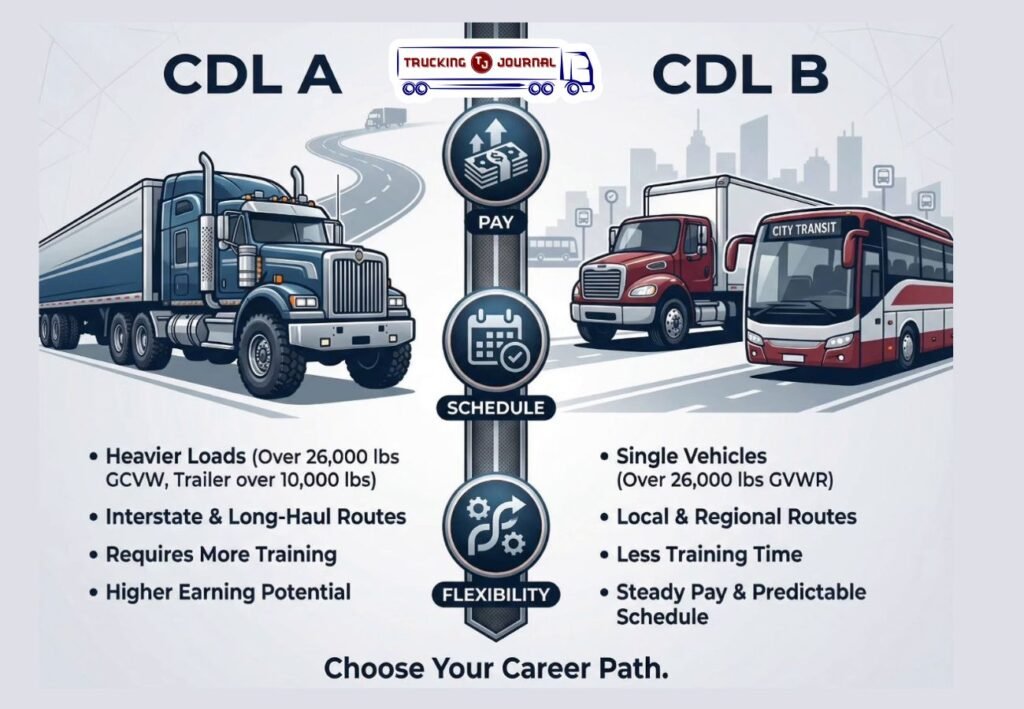
A CDL A license is the most versatile and in-demand credential. It allows you to operate:
- Tractor-trailers
- Flatbeds
- Tankers
- Livestock haulers
- Any combination vehicle with a GCWR of 26,001 lbs+ (with trailers over 10,000 lbs)
Career Opportunities with CDL A:
- Long-haul (OTR) trucking
- Regional routes
- Local delivery driving
- Specialized freight (hazmat, tanker, oversized loads)
- Owner-operator opportunities
Why choose CDL A?More flexibility, higher earning potential, and broader career growth.
What Is a CDL B?
A CDL B license is designed for single vehicles with a GCWR of 26,001 lbs+ that do not tow trailers over 10,000 lbs. This includes:
- Dump trucks
- Straight trucks
- Cement mixers
- School buses and city transit buses
- Delivery box trucks
Career Opportunities with CDL B:
- Local municipal jobs
- Construction and trade-related driving
- Public transit and school transportation
- Local delivery positions
Why choose CDL B?
Shorter training time, consistent home-daily schedules, and solid entry-level roles.
CDL A vs CDL B: Key Differences at a Glance
| Category | CDL A | CDL B |
| Vehicle Type | Combination vehicles | Single vehicles |
| Trailer Capacity | Over 10,000 lbs | Up to 10,000 lbs |
| Job Flexibility | High | Medium |
| Typical Pay | Higher | Moderate |
| Lifestyle | OTR, regional, local | Mostly local |
| Training Time | Longer | Shorter |
When CDL A or CDL B Makes the Most Sense
Choose CDL A if…
- You want the highest income potential.
- You’re open to long-haul or regional routes.
- You want the option to haul specialized freight.
- You may eventually become an owner-operator.
Choose CDL B if…
- You want a faster entry into the workforce.
- Staying local and home daily is a priority.
- You’re looking at construction, municipal, or transit careers.
- You want a smaller, more manageable truck to start with.
CDL A vs CDL B — What’s Right for You?
When deciding between CDL A vs CDL B, the best choice depends on your lifestyle preferences, earning goals, and long-term career goals. CDL A offers more flexibility and higher pay, while CDL B provides stability and quick entry into local driving jobs.
If you’re ready to start a rewarding career in trucking, take the next step with confidence and choose the license that fits where you want to go.
Ready to start training?
👉 Contact us today and get matched with CDL programs and jump-start your commercial driving career today.