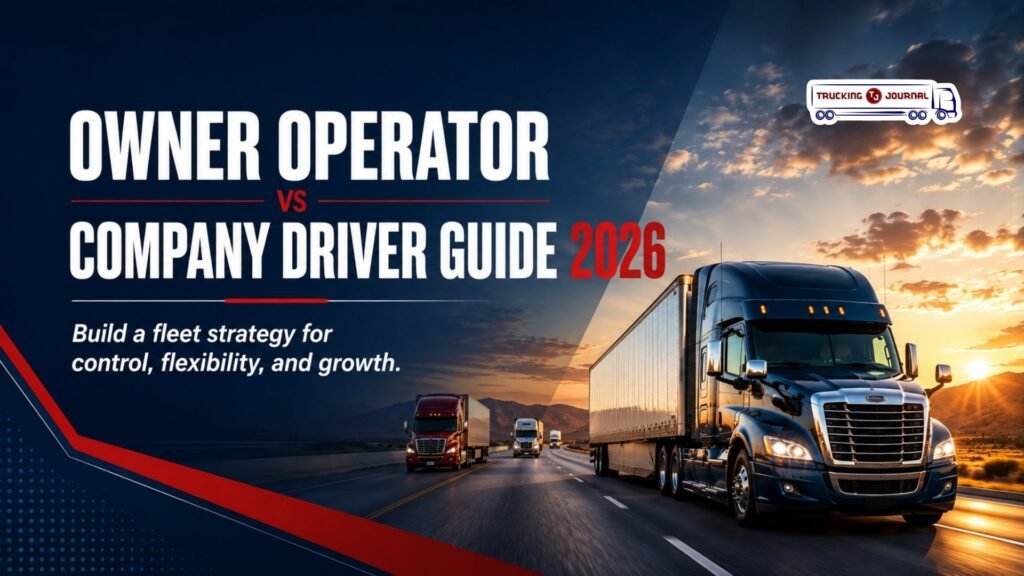
If your fleet is struggling with driver shortages, rising costs, or inconsistent capacity, you’re not alone. The real issue isn’t just hiring; it’s choosing the right trucking business model.
In 2026, the fleets that are growing profitably aren’t asking “owner-operator vs company driver?” as a one-time decision. They’re building flexible, hybrid strategies that adapt to market demand.
Build a Smarter Driver Pipeline
Stop losing drivers to slow hiring and weak funnels. Start attracting and converting better candidates today. Find the Right Drivers for Your Fleet
Here’s how they’re doing it and how you can apply the same thinking to your fleet.
1. Start With the Right Cost Model (Not Assumptions)
Most fleets default to one model based on habit, not data. That’s where margins quietly erode.
Instead, smart operators break down the real cost per mile and cost per load for both models.
- Company drivers: Higher fixed costs (salary, benefits, equipment), but more control and predictability
- Owner-operators: Lower upfront costs, but variable rates and less operational control
- Hidden costs: Turnover, downtime, compliance, and recruiting spend often tip the balance
- Market sensitivity: Owner-operator rates fluctuate more with fuel and freight demand
The takeaway: There’s no universally “cheaper” option. It depends on your lanes, freight consistency, and growth goals.
2. Use Owner-Operators for Flex Capacity
High-performing fleets are no longer all-in on one model; they’re segmenting their workforce.
Owner-operators are increasingly used as a strategic buffer for demand spikes.
- Ideal for seasonal freight, surge capacity, or new lane testing
- Faster to onboard than hiring full-time drivers
- Lower long-term commitment if demand drops
- Reduces the risk of overstaffing during slow periods
This approach turns owner-operators into a scalability tool, not just a staffing alternative.
3. Keep Company Drivers for Core Operations
While flexibility matters, consistency still wins in core lanes.
That’s why fleets are doubling down on company drivers where reliability is critical.
- Dedicated routes benefit from predictable schedules and performance
- Easier to enforce service standards and safety protocols
- Stronger brand control for customer-facing operations
- Better long-term ROI on high-volume, repeat lanes
Think of company drivers as your operational backbone, and owner-operators as your expansion layer.
4. Fix Your Recruiting Funnel (This Is Where Most Fleets Lose)
Even the best fleet strategy fails without a steady pipeline of drivers.
In 2026, recruiting is no longer just posting on job boards; it’s a full-funnel system.
- Targeted outreach: Different messaging for owner-operators vs company drivers
- Faster response times: Speed-to-contact directly impacts hire rates
- Clear value propositions: Pay, flexibility, routes, and support must be obvious
- Consistent follow-up: Most fleets lose candidates simply due to poor communication
If you’re struggling to hire, it’s often not a driver shortage; it’s a funnel problem.
5. Build a Hybrid Fleet Strategy (The Winning Playbook)
The most competitive fleets today are blending both models intentionally.
They’re not choosing sides; they’re designing systems.
- Allocate company drivers to high-priority, stable lanes
- Use owner-operators to handle overflow and expansion
- Adjust the mix based on market conditions and freight volume
- Continuously track performance and cost efficiency across both groups
This hybrid approach gives you control and flexibility, something single-model fleets struggle to achieve.
Where Most Fleets Get Stuck (And How to Move Forward)
Here’s the reality: knowing what to do is one thing; executing it is another.
Most fleets hit bottlenecks when it comes to:
- Consistently recruiting qualified drivers
- Scaling owner-operator onboarding
- Keeping pipelines full without wasting ad spend
That’s where having the right recruitment system becomes a competitive advantage.
If your hiring isn’t predictable, your growth won’t be either.
Build a Smarter Driver Pipeline
Whether you’re hiring company drivers, owner-operators, or both, the goal is the same: a reliable, scalable recruiting system.
That means:
- Attracting the right drivers (not just more applicants)
- Automating follow-ups and screening
- Turning interest into hires faster
The fleets winning in 2026 aren’t just running trucks better; they’re recruiting smarter.
Find the Right Drivers for Your Fleet, Start Recruiting Smarter
Stop guessing which model will work. Build a system that supports both.
Find the right drivers, optimize your fleet mix, and scale with confidence.
Scale Your Fleet Without Hiring Guesswork
Get a predictable system for hiring company drivers and owner-operators.