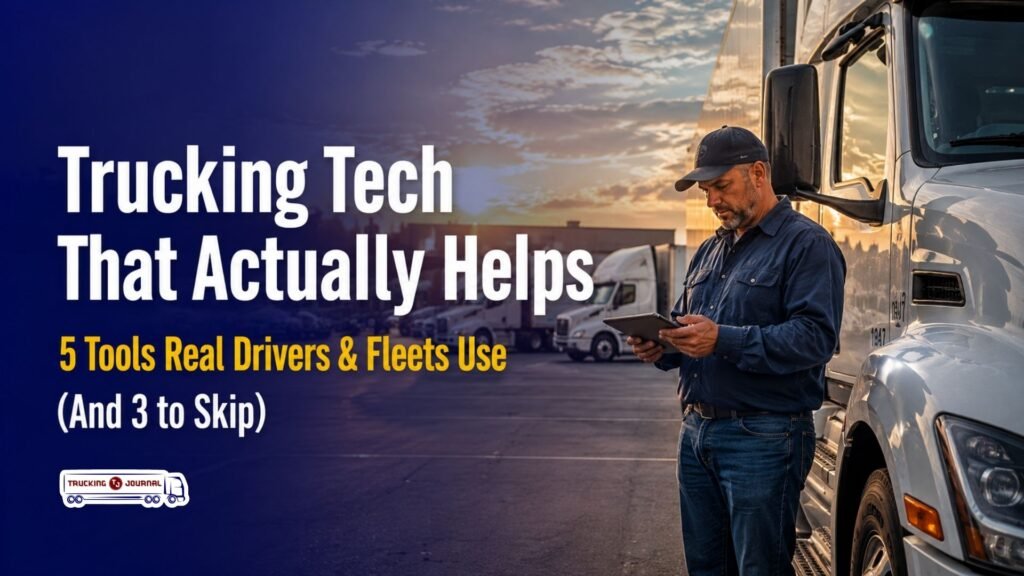
Some trucking tech genuinely saves drivers hours and fuel; a lot of it just burns battery and budget. This post focuses on the tools real fleets lean on every day, and a few overhyped subscriptions you can skip.
Stay Ahead of Trucking Tech and New Job Openings
Some tools help, others just beep
Some trucking tools make work safer, more profitable, and less stressful; others pile on logins, notifications, and “insights” nobody uses. With margins tight and regulations growing, fleets need tech that pays its way in fuel, safety, uptime, or better loads, not gadgets that only look good in a demo.
1. Smart navigation and routing
Modern GPS and routing tools go far beyond basic maps, layering in truck‑legal roads, live traffic, low‑clearance warnings, and optimized routes that cut idle time and detours. For fleets, dynamic routing can reduce miles driven, fuel burn, and late deliveries, especially when paired with dispatch systems.
What actually helps
- Truck‑specific GPS apps/devices with height, weight, and hazmat routing.
- Dynamic routing that adjusts to traffic, weather, and last‑minute customer changes.
- Fuel‑aware routing that steers drivers toward cheaper fuel stops on their path.
When it pays off (example)
A regional fleet running daily routes between warehouses switches from generic maps to truck‑specific navigation with dynamic routing. Over a quarter, they cut average route time by 15–20 minutes and trimmed out-of-route miles, saving thousands in fuel and overtime while reducing “I couldn’t find the entrance” detention incidents.
2. ELDs and simple fleet telematics
Electronic Logging Devices (ELDs) are mandatory in many markets and can do much more than log Hours of Service; they can feed real‑time location, speed, and basic engine data into a telematics platform. When configured well, this combo gives dispatchers visibility without constant calls and helps drivers stay compliant without wrestling spreadsheets.
What actually helps
- ELDs that are easy for drivers to use and integrate cleanly with dispatch/TMS.
- Core telematics: GPS tracking, geofencing, and simple driver scorecards for speeding, hard braking, and idling.
- Automated HOS alerts and basic compliance reporting instead of manual log audits.
When it pays off (example)
A small carrier adds ELDs integrated with a simple telematics platform. Within months, they cut logbook violations, reduced idle time via coaching, and stopped “where’s my truck?” calls from shippers by offering live tracking links.
3. Maintenance and health‑monitoring tools
Downtime kills profit, and modern health‑monitoring tools can flag issues before they become roadside breakdowns. From engine fault alerts to mileage‑based service reminders, these tools keep trucks in rotation instead of on a hook.
What actually helps
- Maintenance software that tracks service history, PM intervals, and recalls for each unit.
- Health monitoring that surfaces critical engine faults and sends alerts to the right people.
- Basic tire pressure and temperature monitoring on trailers hauling sensitive or heavy loads.
When it pays off (example)
A reefer fleet uses a maintenance platform and temperature monitoring on high‑value loads. One night, a unit throws a temperature alert; the driver gets a ping, pulls over, clears ice from the vents, and saves a load that would have been rejected, avoiding tens of thousands in claims.
4. Load boards, freight‑matching, and broker apps
Digital load boards and freight‑matching platforms help owner‑operators and small fleets keep their trucks full and reduce deadhead miles. Many tools now combine smart search, market rate data, and one‑tap booking, so drivers spend less time refreshing and more time rolling.
What actually helps
- Reputable load boards that show clear rates, lane history, and broker credit scores.
- Freight‑matching apps that recommend loads based on your equipment, preferred lanes, and reload options.
- Broker apps that integrate with your TMS or back‑office software so you are not retyping the same data.
When it pays off (example)
An owner‑operator who usually runs spots adds a smart freight‑matching app that considers their home base and preferred lanes. Within a few weeks, they cut deadhead by stringing together better reloads and stop taking underpriced freight just to get moving.
5. Driver‑first communication and document tools
Drivers live on their phones, so the most useful communication tools put everything in one place: messages, load details, and document scans. Well‑designed mobile apps reduce miscommunication, speed up billing, and limit how often drivers need to call in from the side of the road.
What actually helps
- Secure messaging apps tailored to trucking that centralize dispatcher, safety, and back‑office communication.
- Builtin document scanning for BOLs, PODs, and receipts, so billing can start as soon as a load is delivered.
- Simple load views showing pickup/drop, special instructions, and contact numbers, all in one screen.
When it pays off (example)
A fleet rolls out a communication app with document scanning. Instead of waiting days for paperwork, accounting receives PODs same‑day, shortens billing cycles, and improves cash flow, while drivers stop juggling text threads and photos in their personal phones.
Three tools that often disappoint
Some categories sound impressive in a demo but deliver little day‑to‑day value for working drivers and lean fleets.
1. Overbuilt “AI dashboards” nobody uses
Advanced analytics platforms promise to “optimize your entire operation” but often dump data and charts on managers without clear actions. Without dedicated analysts, these systems become expensive wall art: lots of graphs, very few decisions.
Why they disappoint:
- Steep learning curve and complex setup.
- Generic insights that drivers and dispatchers can’t translate into real changes.
- High per‑truck or per‑user fees that erode already thin margins.
2. Niche gadget subscriptions with recurring fees
From highly specialized sensors on rarely used trailers to “premium” add‑ons that duplicate existing features, many niche tools end up underused. Fleets sign up, test them for a month, and then forget to cancel, leaking the budget.
Why they disappoint:
- Redundant with capabilities in ELDs, telematics, or driver apps you already pay for.
- Low utilization, only a few trucks or loads actually benefit.
- Long contracts and “intro offers” that quietly auto‑renew.
3. “All‑in‑one” platforms that do everything… badly
Many vendors push a single platform that promises to replace your TMS, telematics, maintenance, payroll, and more. In practice, you get an average experience in every module and a nightmare if you ever want to switch.
Why they disappoint:
- Weak features compared with specialized tools in each category.
- Painful migrations and lock‑in if the vendor raises prices or stalls on updates.
- Frustrated users who work around the system with spreadsheets and side apps anyway.
Quick checklist: is this tool worth it?
Run every new trucking tool or subscription through a simple, road‑tested checklist before you sign:
- “Does it clearly save time, fuel, or fines?”
If you cannot state in one sentence how it saves minutes, miles, or money, it is not ready for your fleet. - “Will drivers actually use it?”
If it takes more than a short toolbox talk to explain, adoption will be low. - “Does it replace something, or add another login?”
Tools that replace a manual process (paper logs, phone calls, spreadsheet routing) are valuable; tools that just sit beside them are not. - “Can it integrate with what we already have?”
Look for connections to your TMS, ELD, or billing system so data flows automatically and you are not re‑typing everything. - “How fast can we see ROI?”
Aim for tools that can prove value within one quarter, through reduced violations, lower fuel, fewer breakdowns, or better paying loads.
If a tool fails two or more of these questions, it is probably a pass for now.
What should we review next?
The best way to filter out gimmicks is to listen to the people who live with these tools eight to ten hours a day. If you are a driver, fleet owner, or vendor, share the one app, device, or platform you think deserves a deep, road‑tested review next.
Want more no‑nonsense breakdowns of trucking tech, plus new opportunities when good jobs open up? Subscribe to our newsletter or turn on job alerts using the form on this page, and we’ll send the next review—and the next hiring opportunity, straight to your inbox.
Which trucking tech should we put under the microscope in an upcoming post?